
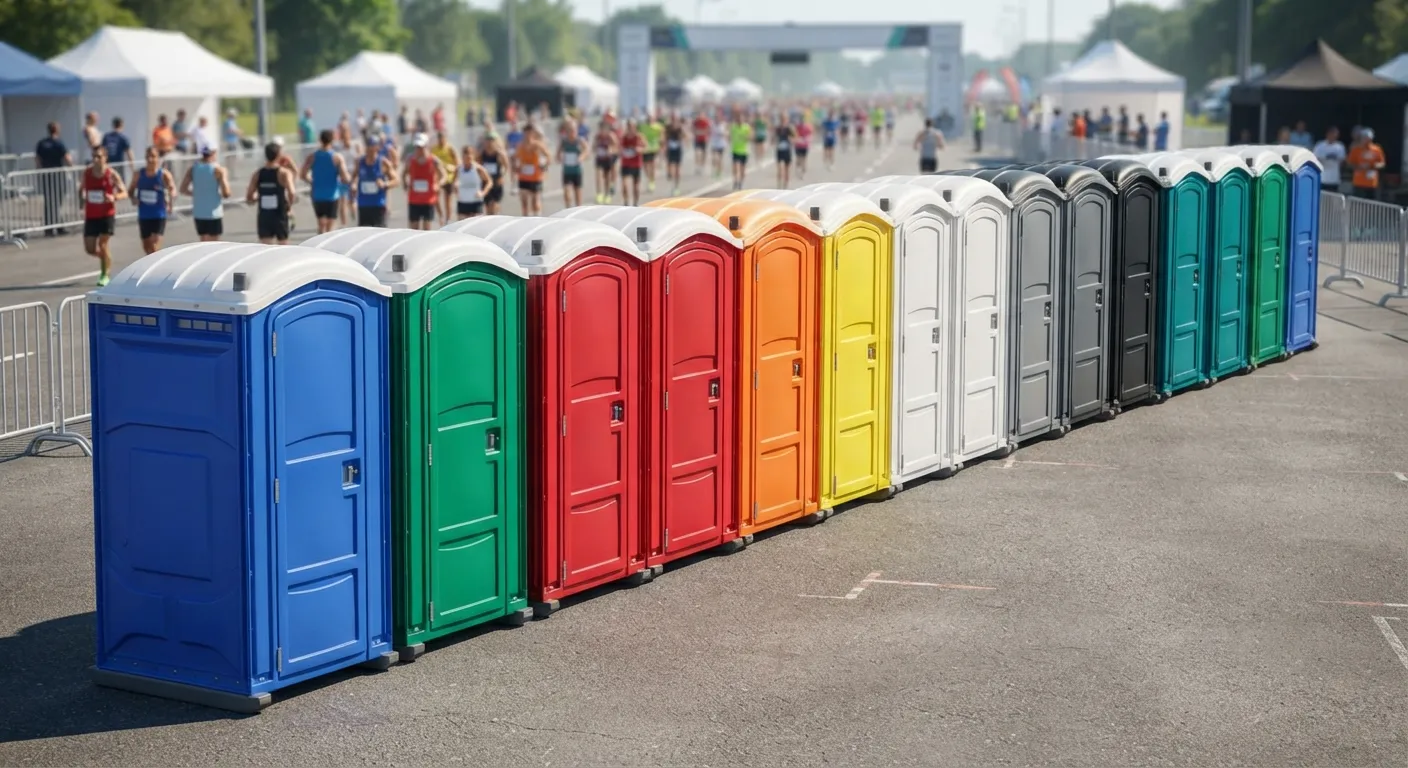
How many restrooms does a race need?
Start with the field size, then split it between the start line, the finish chute, and any aid stations along the route. A field of 500 runners typically needs somewhere around four to six standard porta potty units at the start, with a couple more staged near mile markers if the course loops back through town. OSHA 1926.51(c) sets ratios for construction crews, not spectators, but race directors use the same logic: more bodies, more fixtures, shorter wait times. If your event pulls a crowd with limited mobility, ADA Standards section 213.2 requires that at least 5 percent of clustered single-user units be accessible, never fewer than one, so budget an ADA accessible porta potty into every cluster you place. Finish line crowds bunch up fast, so put your densest cluster there and thin it out along the route. Need help running the math for your specific field size? The how many porta potties do I need guide walks through it step by step, and a porta potty rental checklist keeps the whole order organized before delivery day.
Where should restrooms go on a race course?
Restrooms belong at the start corral, the finish chute, and any aid station past the halfway point, set back far enough from the running lane that a line does not spill into traffic. Placement also has to account for delivery access. A standard unit runs about 44 by 48 inches on the ground and stands roughly 92 inches tall, small enough to tuck into a parking lot corner or grass verge near a water stop. Larger amenities need more room: a restroom trailer or a roll-off delivery needs about 60 feet of straight clearance behind the truck, so a downtown Tallahassee course with tight side streets may only fit trailers at the start and finish, not mid-route. If your race runs near Bradfordville, about 10.1 miles north of downtown Tallahassee, or out toward Chaires, 10.3 miles east, factor the drive into your delivery window so units land the night before, not race morning. Surfaces matter too. ADA Standards section 302.1 calls for stable, firm, slip-resistant ground, which rules out soft turf for accessible units. Check the porta potty placement guide for surface and clearance details, and route power or lighting needs through light tower rental if your race starts before sunrise.
If your event also needs a generator or lighting rig near the finish line, that gear usually runs off a temporary power pole, and how to brace a temporary power pole matters more than people expect on grass or gravel. A pole set in soft ground without a proper base can lean or shift once cables pull taut, so crews typically anchor it with guy wires staked at an angle away from the pole and check the base is level before running any load. GFCI protection under OSHA 1926.404(b)(1)(ii) still applies to any temporary circuit on site, race or construction. Pair that pole placement with barricades that meet OSHA 1926.202's ANSI D6.1 standard if you are cordoning off a staging area near the restrooms, and keep the route clear of debris per OSHA 1926.25 housekeeping expectations, even though those rules were written for job sites, not 10Ks.
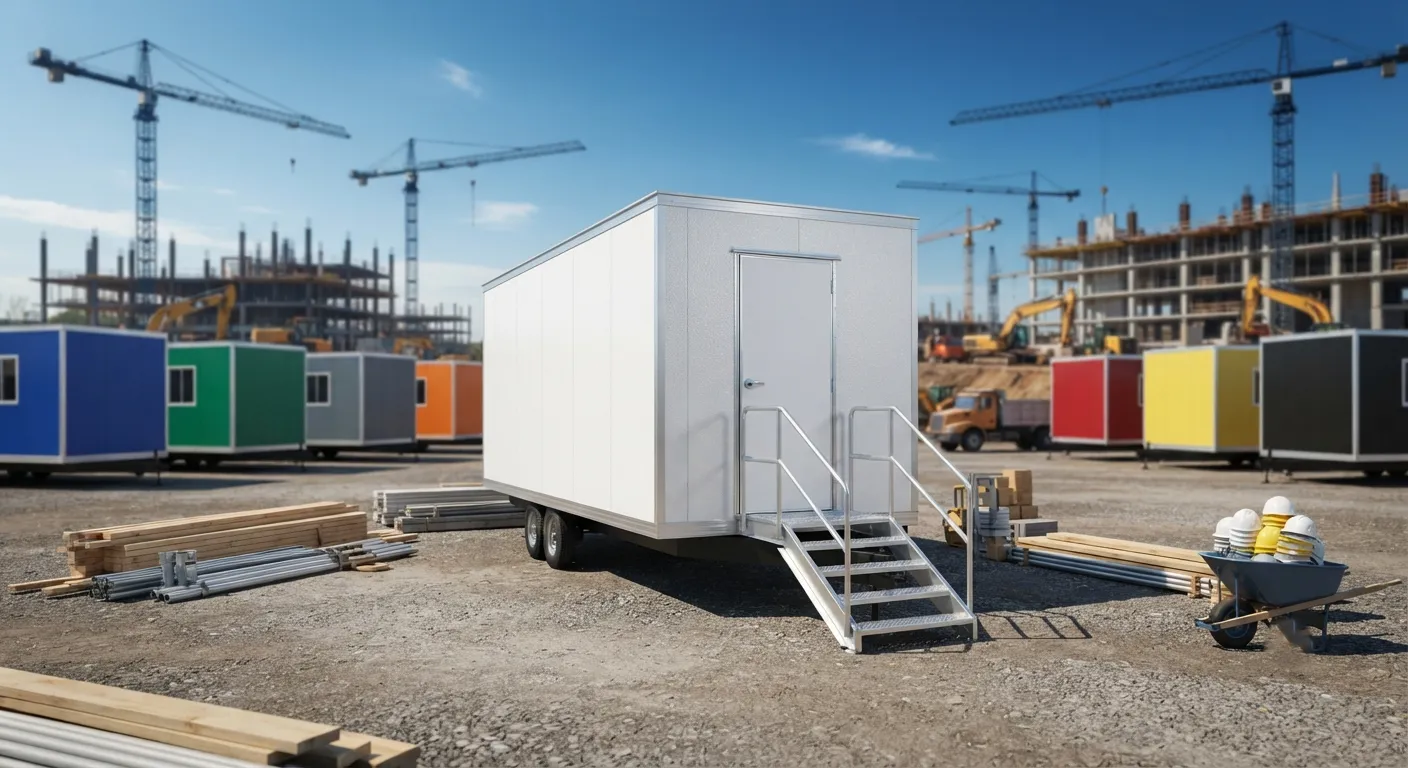
What does race day restroom rental cost?
Pricing depends on unit count, event length, and whether you need multi-day standby for packet pickup the day before. Most race organizers rent by the event or weekend rate rather than a single day, since setup usually happens the afternoon before.
| unit | duration | typical price |
|---|---|---|
| standard | weekend | $250 |
| standard | event | $400 |
| ada | weekend | $240 |
| deluxe | week | $250 |
A porta potty rental cost breakdown covers what drives the price up or down, and if your race is part of a larger festival weekend, the festival restroom rental and event restroom rental pages cover multi-day layouts. Golf charity runs and 5Ks paired with tournaments should also check golf tournament restrooms for combined event pricing. Delivery fees stack separately from unit rental, so ask for the full quote in writing before race weekend, not after.
How far in advance should I book restrooms for a race?
Book four to six weeks out for anything over 300 runners, since trailers and ADA units book up fastest around fall race season. A request a quote submission with your expected field size and course map gets you a faster turnaround than a phone call alone.
Do I need handwashing stations at aid stations?
Yes, especially near food or gel stations. 29 CFR 1910.141(d)(2) requires soap and towels or a hand-drying device at washing facilities, since sanitizer alone does not meet that standard. A handwashing station rental at each aid station covers it.
Can restrooms be placed on grass or trail sections?
Sometimes, but ADA units need firm, stable ground under ADA Standards section 302.1. Grass works for standard units on a dry course; muddy trail sections usually need a gravel pad or paved detour instead.
What if my race route changes at the last minute?
Call ahead. Tallahassee Porta Pros can often reposition units before delivery locks in, but course changes after trucks are loaded may mean a rescheduled drop rather than a same-day move.
Do I need restrooms for a small fun run under 100 people?
Usually two to three standard units cover it, split between start and finish. Check the porta potty rental per day page if your event runs a single morning only.
Next step
Get a delivery date
Tell us the address, the dates and the headcount. We size the order and confirm the route.