
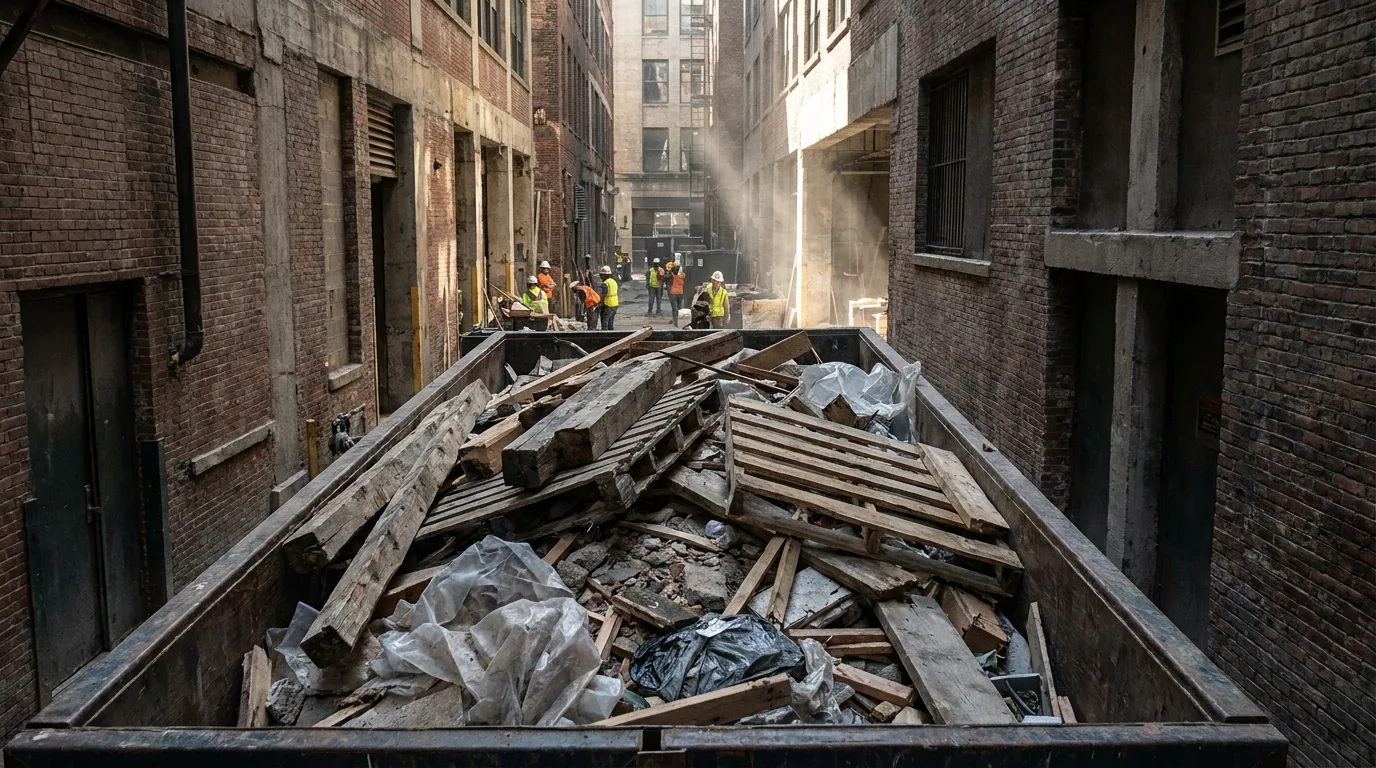
What items are banned from roll-off dumpsters?
Hazardous materials top the list: paint, solvents, pesticides, herbicides, motor oil, antifreeze and gasoline. Anyone who has been spraying herbicides or insecticides on a job site needs washing facilities under OSHA 1926.51(f)(1), and the same chemicals that trigger that rule are the ones that cannot go in your bin. Tires, car batteries and propane tanks are refused because they can rupture or leak in transit. Asbestos siding, roofing tar and railroad ties fall under separate hazardous waste handling. Electronics like TVs, monitors and computers usually get pulled too, since many contain heavy metals. Refrigerators, freezers and AC units need refrigerant recovery before they are scrapped, so they are typically a separate pickup. If you are clearing out a Tallahassee garage or finishing a home renovation job, check with your provider before you toss anything that once held fuel, chemicals or refrigerant. For a full breakdown by size, see our dumpster sizes and dimensions page, and compare rental lengths on the roll-off dumpster rental page before you book.
Why do dumpster rental companies restrict certain materials?
Weight and hazard risk drive most restrictions. A 10 yard dumpster rental or 20 yard dumpster rental has a weight ceiling, and wet materials like concrete, dirt and roofing shingles fill that limit fast without filling the box. Check dumpster weight limits before you load anything dense. Liquids are barred outright because they leak during transport and complicate landfill acceptance. Medical waste, sharps and biohazard material are refused for the same reason a septic company would refuse to dump raw waste on open ground, it is a public health issue, not a preference. Wet paint cans are treated differently than fully dried, empty ones. If your project involves any kind of coating work, pair your dumpster with a look at our what cannot go in a dumpster guidance early, before the truck shows up in Tallahassee. Renters planning a bigger tear-out should look at the 30 yard dumpster rental or 40 yard dumpster rental options, since oversized debris like furniture and mattresses often needs the larger box anyway.
Do I need a permit for banned or oversized debris?
Placement of a dumpster in a street or right of way needs confirming with the City of Tallahassee before delivery; we have not verified a specific permit rule here, so call ahead rather than assume. Our dumpster permit requirements page covers what to ask when you call. Even with a permit in hand, banned items do not become allowed, permits govern placement, not contents. If your load includes construction debris from a job covered by construction dumpster rental, your general contractor may already have a disposal plan for hazardous items separate from the dumpster itself. Roll-off trucks need roughly 60 feet of straight clearance behind them to deliver and pull the container, so confirm your driveway or lot in Tallahassee can accommodate that before delivery day, regardless of what is going inside. If your property sits out toward Bradfordville, about 10.1 miles north, or Chaires, 10.3 miles east, confirm delivery access with dispatch since rural driveways vary more than in-town lots.
| item category | typical restriction |
|---|---|
| paint, solvents, pesticides | banned, hazardous waste |
| tires, batteries, propane | banned, rupture/leak risk |
| asbestos, roofing tar | banned, separate handling |
| electronics, appliances with refrigerant | usually separate pickup |
| wet concrete, dirt, shingles | allowed but weight-limited |
What should I do with items the dumpster will not take?
Call your provider before you rent so the crew can flag disposal options for paint, batteries and electronics ahead of delivery. Many of these items have dedicated drop-off or recycling paths outside the dumpster system entirely. If your project also generates wastewater, such as a septic backup during a renovation, that is a separate call for septic pumping service or septic tank cleaning, not something to pour into a roll-off. Grease from a kitchen remodel or food truck event falls under grease trap pumping rules, since a grease interceptor is pumped once fats, oils and solids hit 25 percent of the liquid depth, not tossed in with demolition debris. For ongoing jobs where you are unsure what counts as hazardous, ask your Tallahassee driver directly, they deal with this daily and would rather answer up front than reject a load at the curb.
Can I put a mattress or furniture in a roll-off dumpster?
Yes, mattresses and furniture are generally accepted, they just take up volume fast. A queen mattress and a couch can eat a third of a 10 yard box. If you are clearing a whole house, size up to a 20 or 30 yard unit rather than overloading a smaller one.
Can wet paint go in a dumpster?
No. Wet paint is treated as hazardous liquid waste and is refused. Dried, empty paint cans with no liquid sloshing inside are typically fine. When in doubt, let cans dry out fully with the lids off before loading, or ask your Tallahassee provider about local drop-off options.
Are propane tanks ever allowed?
No, empty or full, propane tanks are refused in roll-off dumpsters because of rupture risk. Most hardware stores and propane retailers accept tank exchanges or empties for safe disposal instead.
What happens if hazardous material is found in my dumpster?
Expect an extra fee or a rejected load. Providers sort loads before dumping, and hazardous material discovered later can trigger disposal fees passed back to the renter. It is cheaper to separate it yourself up front.
Does a roll-off dumpster need a permit in Tallahassee?
Possibly, depending on where it sits. Placement in a street or right of way needs confirming with the city directly. Driveway placement is usually simpler, but always confirm before delivery day to avoid a rescheduled truck.
Next step
Get a delivery date
Tell us the address, the dates and the headcount. We size the order and confirm the route.